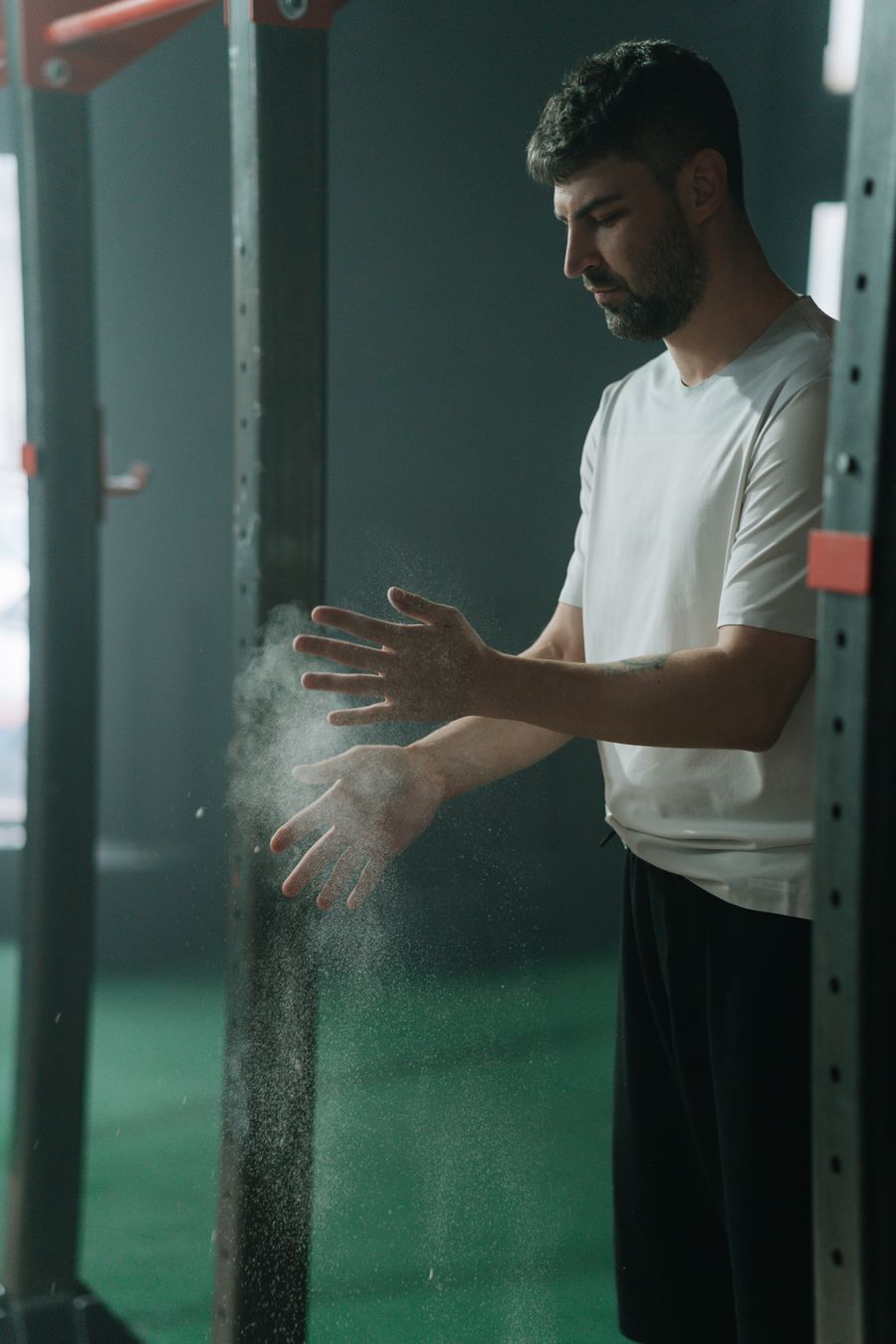
Grip strength: the overlooked marker of a healthy man
Grip strength is one of the most useful and least trained markers of a capable body. It tracks with how you age and it costs almost nothing to build. Here is why to care.
Why grip is a useful signal
Grip strength has a reputation among people who study ageing as a surprisingly good general marker. It tends to track with overall body strength and with how robustly a person is ageing, which is why it comes up so often as a simple, cheap test. A strong grip usually means a generally capable body behind it.
It is worth caring about not because a handshake test is magic, but because it is a visible edge of a bigger thing: the whole-body strength and function that lets a man stay useful and independent for decades. Losing grip strength is often an early sign of losing more than grip.
The most practical strength there is
Beyond the health signal, grip is the most everyday strength you have. Fathers use it constantly: hauling a sleeping child up the stairs, carrying all the shopping in one trip out of stubbornness, hoisting bags, holding on, hanging on.
A weak grip shows up in ordinary life as things being harder than they should be. A strong one makes the physical parts of fatherhood, and of being a capable adult, quietly easier.
Build it without extra time
The good news is you do not need dedicated grip workouts. Grip is built by holding and carrying heavy things, which you can bolt onto training you already do.
- Loaded carries: pick up something heavy and walk with it
- Deadlifts and rows, held without straps, tax the grip hard
- Hanging from a bar, which also decompresses the shoulders
- Carrying real-life loads on purpose instead of making two trips
A byproduct, not a project
The point is not to obsess over crushing a gripper or chasing a specific number. It is to recognize that a strong grip comes along for free when you train your whole body with carries, holds, and pulls, and that it quietly reports on your overall strength as you age. Train hard and practical, carry heavy things, and let a strong grip be one of the honest markers that you are keeping your body capable for the long haul.
Common questions
Why is grip strength important?
Grip strength is a well-recognized general marker that tends to track with overall body strength and healthy ageing, which is why it is used as a simple test. It is also intensely practical for a father, powering everything from carrying a sleeping child to hauling the shopping.
How do I improve my grip strength?
Build it through holding and carrying heavy things rather than dedicated grip work. Loaded carries, deadlifts and rows held without straps, and hanging from a bar all tax the grip hard, and carrying real-life loads on purpose helps too. It comes as a byproduct of training the whole body.
Is grip strength a sign of health?
It is considered a useful proxy. A strong grip usually reflects a generally strong, capable body, and declining grip strength can be an early signal of broader loss of strength and function. It is one visible edge of the whole-body capability that supports independence as you age.
Do I need special equipment to train grip?
No. You can build a strong grip with the training you already do: loaded carries, deadlifts and rows gripped without straps, and hanging from a pull-up bar. Simply carrying heavy real-life loads instead of making multiple trips also helps, so no special grip tools are required.
SuperPapa turns this into a system you actually run.
Five pillars, one weekly scoreboard, and an agent that guards your training and your time with the kids.